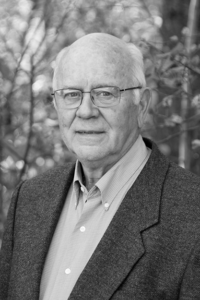
Dr. Wayne Lees grew up in Lethbridge, Alberta, where a high school summer job at a veterinary clinic sparked a lifelong passion for working with animals. After graduating with a Doctor of Veterinary Medicine from the Western College of Veterinary Medicine (University of Saskatchewan) in 1975, he established a mixed animal practice in central Alberta. During those years, he also taught animal health technology students at Olds College.
Dr. Lees joined the Canadian Food Inspection Agency (CFIA) at the Animal Diseases Research Institute in Lethbridge in 1986. As head of the Clinical Research section, he oversaw the health and welfare of the research beef herd, sheep flock, and mouse colony. During this time, he continued his education, earning a Master of Science in veterinary epidemiology from the Ontario Veterinary College (University of Guelph) in 1989.
The graduate program captured and cemented his interest in population medicine: specifically, how disease outbreaks move through a population, how they can be detected earlier, and how they can be prevented. This work naturally bridged into the “One Health” concept, which links animal health with human and environmental health.
In 1993, Dr. Lees moved with his wife, Leah, and their four young children to Trinidad and Tobago to accept a two-year position with the Inter-American Institute for Cooperation on Agriculture (IICA). His mission was to create an early warning system for plant and animal diseases that could spread throughout the Caribbean. The role involved collaborating with Ministers of Agriculture across more than 20 Caribbean countries, alongside numerous international health agencies. This holistic One Health approach aimed to secure regional food supplies and to protect communities from zoonotic diseases like rabies.
After returning to Canada in 1995, he and Leah established a rural large-animal veterinary practice in Oak Lake, Manitoba, planting deep roots in the community. Wayne subsequently rejoined the CFIA as a veterinary epidemiologist with the Animal Disease Surveillance Unit. There, he developed early warning surveillance systems and investigated several significant outbreaks, including chronic wasting disease, highly pathogenic avian influenza, bovine spongiform encephalopathy (BSE), and bovine tuberculosis in wild elk.
Dr. Lees went on to recommend policies for national disease control programs and developed the Canadian Animal Health Surveillance Network. By linking all provincial veterinary diagnostic information so it could be shared nationally, the network created a powerful warning system for animal diseases that had a profound national impact. Other animal health networks involved in early disease detection have since adopted this very model.
In 2005, Dr. Lees became Manitoba’s first Chief Veterinary Officer, responsible for provincial animal health and safety. He managed critical emergencies—such as H1N1 influenza in swine, avian influenza, and bovine tuberculosis in wild elk—as well as human safety issues related to exotic pets. He also initiated Canada’s first standing Zoonotic Diseases Committee, integrating human, animal, and environmental health under the One Health banner. To strengthen national collaboration, he chaired the national Council of Chief Veterinary Officers and helped found the National Farmed Animal Health and Welfare Council (now Animal Health Canada), bringing together producer organizations and all levels of government to tackle neglected animal health issues.
After retiring in 2014, Dr. Lees continued to share his expertise. He consulted for Manitoba Agriculture on small-scale farming and food processing, advised Health Canada on its antimicrobial policy review, and reported to Manitoba’s Minister of Agriculture on options to update the rural veterinary service delivery model. He also chaired the Board of Prairie Diagnostic Services Ltd. and served as a veterinary advisor to the Animal Care Committee of the University College of the North.
Today, Dr. Lees serves as a coordinator for Squeal on Pigs Manitoba, where he has developed a collaborative, multidisciplinary approach to eradicating invasive Eurasian wild boar from the province. He also co-manages a small acreage and beef herd with his wife, Leah, and is blessed with three adult children and eight grandchildren. Over the years, he has driven both oxen and horses, and when asked which he prefers, has been known to respond, “The more I drive an ox, the more I like my horse.”